Thursday, October 13, 2011

Recipe: Feta Filled Cherry Tomatoes


This is such a cute little canape recipe- I love it! I invented it when i was 8, I think when i started inventing dishes, it was all about party food for me- i wanted to make food that groups of my friends and family would really enjoy at social gatherings. I used to make delicious big jugs of non-alchoholic coctails as well. They were always so nice, and have never been able to make drinks (whether boozy or not!) as good as those ones back then. I think it was the large amounts of fresh mint i used to put in them from the garden, theres just something about fresh garden mint. Its different to shopbought.

Anyway, rabbiting on like usual- This is a recipe I am submitting to Love The Garden's new recipe competition "A Taste for Tomatoes". It's all about celebrating this wonderful fruit, and sending in our recipes that bring out the full flavour of our lovely toms! I think my favourite variety of the tomato is the cherry- they're lovely and sweet and crunchy, LOVELY. The salty feta here works very well with the sweetness of the tomato. The competition is judged by food blogger James Ramsden, and the prize is £200 at a meal of your choice. If any of you want to have a go at this recipe competition, or check out their website for growing tips, here's a link:

http://www.lovethegarden.com/blog/a-taste-for-tomatoes-a-recipe-blog-competition

Feta Filled Cherry Tomatoes

200g feta
A few slices red onion
50g peeled diced cucumber
2 tbsp chopped fresh coriander
2 tbsp chopped fresh mint
1 tsp lemon juice
Salt, sugar and pepper to taste
About 20 large cherry tomatoes
Optional: herbs for garnish

1. Slice a little hole in the top of each cherry tomato, and hollow out the centres of them.
2. Blend all the other ingredients in a food processor, and season to taste. If it is a little too thick, add some water.
3. Fill the hollowed out cherry tomatoes with the feta mixture, and arrange on a place in a circle. Garnish with herbs if you fancy it, and serve!

PS: The feta filling also makes a very nice dip!

A rubbish hack to help sort out your waste


Amongst many things, the Dispatches documentary on Monday demonstrated how confused people still are over which packaging can be recycled in their local bins.

Packaging information, especially in relation to plastics, is still inconsistent and even though the on-pack labelling is getting better, for many the uncertainty of what can be recycled locally still pervades like a bad smell.

So if you're one of the hundreds of thousands who are still confused, here are my top tips.


1. Get the latest information from your council

Before you do ANYTHING ELSE, yes,  even embarking on reading the rest of this post, get on the blower to your local council, and ask the recycling officers EXACTLY what you should put in your bins. I know it sounds obvious, but if you've been pondering how complicated it all is, this really is the best place to start.


Council information generally describes recyclables by product type and you'll find local authorities mainly fall into two categories; those where you can recycle most types of plastic packaging (and will include yoghurt pots, margarine tubs and fruit punnets) or those that can't, thus limiting your plastics collection to simply bottles (including drinks bottles, detergent bottles, milk containers & toileteries).

If the information isn't clear.  Then ask questions so that you are clear on what can\can't be put in your local bins.

Another excellent source at your disposal (please excuse the pun), is the Recycle Now website.  You just pop in your postcode and Bob's your uncle, as the system will return the results of what can be recycled at your kerbside, as well as Bring Banks and Household Waste Recycling Centres.

Once you are confident about your council's rules, you will become less reliant on packaging labelling and hopefully less frustrated.

After all, if you can't recycle a plastic fruit punnet through your local collection, you just can't recycle it regardless what  message the packaging information might tell you, so don't fall into the trap of getting hot and bothered.  Instead try and buy the product loose instead.


2. Find out what the recycling labels really mean.

Even though your local recycling officer is the best source to use, the new on-pack recycling labels can offer some extra help, and that's mainly to raise awareness of the materials used and the likelihood that they can be recycled.

Again, the best place to find out about the labelling guidelines is at the Recycle Now website.  Remember, the labelling advice should be followed as a call to action, prompting you to check with your local authority (coming back to point 1) as opposed to a definitive guide in itself.

Once you are familiar with your local rules, even if the packaging doesn't have the correct up-to-date information printed on it you'll be more confident about what you should do.  For example, whilst shopping in a supermarket the other day, the own-brand bread packaging showed that it couldn't be recycled, despite the fact that a new in-store collection had been introduced only a month or so earlier, which actually collects packaging film such as bread bags and toilet-roll wrappers.


3. Avoiding packaging that can't be recycled.

With all the controversy surrounding recycling, with its complications, targets and whether it is sorted properly in the first place, it is very easy to lose sight of what we as consumers actually can do to reduce our waste contribution. 

We might not feel as though we have much power, but actually we do...lots!   There are many small changes that we can make, which can have a huge impact if they are applied across the nation.  I'd hoped to include some of these this week on Woman's Hour, but we simply ran out of time.  This list is not exhaustive by any means, and should really be considered as a starter for ten....

  • Avoid packaging: Buy loose wherever possible, and support independent stores such as Unpackaged, which actively promotes that you use your own containers.
  • Switch packaging: If there isn't an unpackaged option, switch products you can't recycle for those that you can. For example one particular major toothpaste brand comes in small thin plastic bottles, made from the same plastic as fizzy drinks bottles and can be recycled widely.
  • Choose reusable: You can also reduce your packaging by switching from disposable products to reusable ones and prevent other waste too.  Jackie, who was featured in the Dispatches programme, took my advice about ditching floor wipes and bought a reusable mop.  This will save her loads of cash as well as reducing the amount of rubbish thrown away.  If you're an avid baby wipe user, try using soft washable cloths instead.
  • Upcycle: If you can't recycle the packaging or avoid it completely, try upcycling it instead and raise some cash for your favourite charity.  Terracycle offers an upcycling service for packaging from brands that include Johnson's baby wipes, Ella's smoothies, Kenco coffee refills and Aquafresh toothpaste tubes and toothbrushes.  It's a great scheme for schools and local community groups.  The products are turned into new things that are sold on the Terracycle website.
  • Split It: If you live in one of the areas that doesn't recycle plastic yoghurt pots, check your supermarket shelves for products that use less plastic.  There are pots on the market that now have a thinner plastic liner and a tear-off cardboard outer (just like the one in the photo).  These can be separated, with the cardboard being recycled and less plastic actually going to waste.   More packaging will move in this direction, especially thanks to innovations such as Split-it, so keep an eye out on the shelves for products that can help you reduce waste.
  • DIY: That's right, do it yourself! If you're hacked off with not being able to recycle your ready-meal trays, see if you can save money and waste by making it yourself.  Or if you've got a great friend who can really cook, and I mean really cook, invite yourself around and have a great night out instead of worrying about what you're going to do with the dirty plastic tray and ikky film. Then invite them over next week for some beans on toast!
These few ideas are just touching the surface, but I hope it at leasts provides some food for thought.  I am sure you'll have loads more suggestions to add to this, which suit your lifestyle better.  And if you want more inspiration, then check out The Rubbish Diet Challenge, which you can read online for free.

Of course, all I've covered here is just packaging waste.  Food waste is much more of a significant issue.  If you're interested in tackling that, watch this space as I'll be back soon with more tips on what you can do at home.

____________________________________________________________________

If you missed the Dispatches "Britain's Rubbish" documentary on Monday, it is still available for the next 27 days at 4OD. It's packed with footage about fly-tipping, plastics, recycling systems and politicians arguing their case as well as the story of how Jackie, a mum from Manchester reduced her family's rubbish from 13kg a week to 5kg.  I know I'm biased, but for me, that's the best bit.  (Just in case you're looking out for it, my appearance is at 15 minutes and 28 minutes into the programme).

If you want to catch up on the Woman's Hour broadcast this week featuring Bob Gordon, Head of Environment for the British Retail Consortium and Liz Goodwin, Chief Executive of WRAP, you can 'listen again' via the BBC Woman's Hour webpage.  Just look for the chapter on Zero Waste.

Wednesday, October 12, 2011

Travel: Snowdonia Day Three


So today after a cooked breakfast, made by my lovely boyfriend whilst I was in the shower (it’s so lovely not to cook sometimes!) we wrote our postcards and headed into Harlech. We had such a lush visit round Harlech Castle- it is such a beautiful fascinating building/ruin. It was constructed in the 14th century by King Edward I, and played an important part in the conquest of Wales. The historical section they have in the middle of the castle had loads of interesting info on it, but I must admit I can’t remember much of it!


Health and safety-wise however, this place is absolutely crazy! I mean, personally I am usually against all these ridiculous guidelines and safety measurements you have these days, risk assessments for nothing, all of that jazz, BUT literally, the stairs you have to use to get to the battlements is thin as hell, there are no safety rails once you get up there, and also loads of the spiral staircases to get down are v v dark. I mean, I guess it’s refreshing to see the castle AS IT SHOULD BE, without loads of modern signs and things, but I felt so scared on the battlements it was mental. Don’t tend to get vertigo, but the feeling that I could fall down really easily was totally freaking me out.


Cute little gift shop as well, I bought a nice classic Welsh cookbook, which I’ll be having a skim through and cooking recipes from some point soon I think. Especially since my home-grown leeks are ready for harvest, and most of these traditional welsh meals are leek orientated. So after Harlech, we decided to have a look round Barmouth, which is this kinda sad traditional sea-side town near to where we were staying.

Theres something kinda sad about Barmouth. I mean, you could tell the town had been hit by hard times, because there were loads of empty shops/ restaurants (Including this café- Arousal Café!!! Ahaha! The C fell off a looong time ago by the look of the place) and lots of knackered pound shop places. It looks almost slightly abandoned I guess, but it was fun having a walk round there, at one point we found one of those old tuppence/10p arcades! OMG I used to spend so much money as a kid in those sorts of places, especially when I went to Ramsgate with my grandmother.

We eventually found, right at the bottom of the town, the NICEST pub!!! It looks so cool in there, it’s called “The Last Inn”, and it served one of the nicest plate of fish and chips that I’ve ever had! The pictures I took are rather dark I guess, so I hope you can see. The first picture is of me sitting on the ledge of what the Inn used to use to keep their beers cool- an open spring that was used as a kind of cellar I think?- and the second is of my lunch!
Hasn’t it been plated funkily? I love the chips in the mini-fryer basket-classic! I wish we’d gone there the night before actually, cause it said they did live music performances (of various genres) on Tuesday nights.


After that meal we decided to walk over Barmouth Bridge, which I wasn’t really aware of, but Nick said apparently it’s kinda famous. I googled it, and basically it is an old railway line as well as a pedestrian walkway, and it was built originally in 1867 (although parts had to be replaced at some point due to wood worms or something). It is a pretty bridge, and a nice little walk, so I would recommend it as an attraction I spose!


We figured after coming back off the bridge and having a quick cup of coffee that we had just enough time for a last attraction, so we thought we would check out a little sign we saw earlier, pointing to “Nantcol Waterfalls”. Must admit we did get a little bit lost looking for them, and by the time we found out where the toll booth was to pay to go and see the waterfalls, it was all dark, so we just walked and took a few nice photos of the fast stream that flowed from the waterfalls, and ended in the town of Llanbedr. Here we found a lush pub called “Tyr Mawr” (yeah….we never figured out how to pronounce it either…lol). If you stay in Wales anywhere near Llanbedr, you HAVE to check out this pub. It lays on a real ale festival the same time every year (unfortunately it started on the weekend 24th-25th September, the day after we left! Doh!), they serve some very nice ales in the pub, and they do some bloody fantastic rustic pub food!

I don’t want to slag the other pub off, but we had heard about this Tyr Mawr pub in the guestbook, but couldn’t find it, so we went to the other pub in town called “The Victoria Inn”, and yeah….it wasn’t very good. I mean the staff were quite friendly, but the atmosphere wasn’t nearly as nice, and the food couldn’t even be compared to the Tyr Mawr pub. I guess direction-wise, the only thing I can say is get into the main village, and if the Victoria Inn is on the right of you, turn left along what looks like just a load of houses, but eventually you will see the sign for Tyr Mawr. It’s a bed and breakfast as well as a pub and restaurant y’see.

Anyway, we had a couple of nice ales, I had an amazing lamb shank (which by the way, I noticed on a fair few menus in Wales, shanks are often called “henrys” instead. Dunno why) with a minted gravy, mixed vegetables and new potatoes, and Nick had a chicken and smoked bacon pie, with gravy, mixed veg and mash. Both of the dishes were stunning, the atmosphere was incredibly comforting and warm, and the local drinkers all seemed really nice. In fact, it was so funny, when we left, I made a point of saying to the man at the bar that this had been a lovely end to our holiday in Wales, and that the meal we just had was FANTASTIC. Just then one of the guys round the bar piped and said in a heavy welsh accent “Glad you liked it, my mum’s the cook”. Haha! Loved it. So traditional and no-frills, Nick and I loved the place.

Well, we then went home, had a bottle of wine, and played another game of Scrabble! I LOVE scrabble, haha! I hate losing though; I am definitely a bad loser. I won the first game by a MILE (mostly helped by “squad” on a triple word- OoooOoh!) but the second game he beat me on the last word! Jammy git! Lol. I like this picture- i managed to get my dog Misty onto the scoreboard....awwwww!Well, we had a lush time in Wales, and someday I will definitely go there again for a little break. I think if we did another cottage holiday though, I reckon we should try The Lake District, a lot of my friends really recommend visiting there. I hope you found this little Northern Welsh guide helpful!

Sunday, October 9, 2011

Me being serious on TV: Dispatches, Britain's Rubbish, C4 8pm

Morland Sanders, investigates Britain's rubbish for C4 Dispatches

I recently did some filming for the Dispatches documentary that's being broadcast tonight. It's called "Britain's Rubbish" and will be aired at 8pm on Channel 4.

When I was asked to contribute, a huge part of me wanted to batten down the hatches, draw the curtains and say "Thanks but no thanks". I normally stay away from the heavy stuff and regular readers will know I don't normally campaign against issues, but instead promote ideas that help empower householders to reduce waste, even if it's just by a small amount.

But as I was about to say "No thank you" to the documentary makers, my thoughts turned back to why I keep raising awareness of recycling and waste reduction. It's because it really is such a serious issue, despite my own natural tendency towards lightening the mood. And I am still as passionate about getting people to talk about their rubbish as I've ever been. Furthermore I'm a constant troubleshooter, who loves sharing positive information that I've gathered, even if it has turned this average householder into a bit of a waste geek. So, as I gave my reply I found myself changing my mind and saying "yes".

I knew the documentary could offer another avenue to raise awareness of all the advances that have taken place in recent years, including the fantastic On-Pack Recycling Labelling standard that helps shoppers better understand whether an item can be recycled. There's also the news how popular brands have made steady inroads into "lightweighting" packaging, designing out wasteful components as well introducing a greater percentage of recycled materials into their products. Such developments should make it far easier for shoppers to dramatically reduce their waste.

However, it soon became clear during filming that whilst being able to demonstrate some of the aforementioned positive points, the experience actually revealed that we are still a long way off from the ideal of a totally transparent system that consumers can easily rely on.

Participating in the documentary gave me the first opportunity in ages to examine a wide range of packaging and I was shocked at that no matter what strides have been made in the last couple of years, labelling across products is still highly inconsistent, with many lines not giving any clear instructions. There were plenty of examples where the text was too small to read easily or simply had outdated advice. Where some products would state that the packaging was recyclable (where facilities exist), other products packaged in the same material stated that it could not yet be recycled. 

Despite well thought-out labelling standards, design guidelines developed by the British Retail Consortium and WRAP (Waste and Resources Action Programme) and strong engagement campaigns to get these adopted by retailers and brands, it has become clear that much of the grocery sector is still lagging behind the need to hurry change. Coupled with this are many examples of overpackaged products that have are still being introduced as new lines.

As a shopper, consumer, householder and waste geek, this is far more than just frustrating. It is a major concern that clear consumer advice is not coming at the speed that is needed and that if the government is serious about its Zero Waste goals and waste prevention strategy, change in the manufacturing sector needs to be implemented faster than is currently tolerated, whether by government or by industry itself.

And the same could be said for the processing of mixed plastics packaging. It's seems very much a futile exercise to invest in labelling if recycling facilities aren't widespread.  It is very encouraging to see commercial plants for mixed plastics being implemented by Biffa and new developments in sorting technologies that are starting to be rolled out by Veolia, but the UK needs deeper investment to make more plants available at a faster speed with flexible contracts that enable disposal authorities to use them.

As things stand, it is increasingly difficult for busy households to shrink their packaging waste when so many local authorities are still unable to recycle common items such as yoghurt pots, margarine tubs, meat trays, ready meal trays, fruit punnets and the cake tubs, the latter of which are becoming an increasingly ubiquitous item in the confectionary aisle. I often argue that it's the consumer's choice to buy these products and I agree that many could chose to vote with their wallets and make alternative choices. However, not everyone has the impetus, the awareness, the time, motivation, access to choice or even the money to tackle their household waste in such way, and we shouldn't be expect it to ultimately be our responsibility either.

So whose responsibility is it to tackle the UK's waste problem?  Naturally we need to start with the brands and the manufacturers. After all, that's where our rubbish actually starts, during the design and manufacturing process. However it only then becomes rubbish if waste operators and local authorities can't collect it because the facilities aren't in place or they don't have markets onto which it can be sold on. However demand is changing and I've spoken to a variety of manufacturers, ranging from bottling plants to recycled plastic tile-makers who want to buy more recycled plastic from the UK.   So it's their responsibility too, to find sustainable solutions and a steady bank of customers. But then there's government, which has the power to legislate, to set much tougher targets, show greater leadership and make better investment to kickstart zero waste economies.

But it's all too easy to fall into the blame culture, which we often witness when one sector has a foodfight with the other.  It's time to move forward from that and whilst the big boys battle it out, I believe that consumers can have a key role to play too in reducing our residual packaging waste and food waste where possible. Whether that means taking a small amount of time to clear up any ambiguities over local recycling advice, switching from disposable to reusable products, boycotting overpackaged products, composting,  following great campaigns such as Love Food Hate Waste, Recycle Week or Zero Waste Week, or even asking for better recycling facilities in local neighbourhoods, it means we can take more control over our bins. And if you're unclear on the packaging guidelines tell your supermarket that you'll leave it all with them, asking that they get back to you.

The waste problem won't go away until we all start working together.  Waste reduction won't be sorted without the help of us, the consumer, even if we are mostly beholden to what's for sale in the shops. Against the background need to preserve our material resources and save energy, as a society, it starts by individuals taking more interest and being more aware of some small changes that could make a big difference and the wider consequences of what happens to the stuff that we chuck in our bins.

The documentary will be aired tonight and I'll be happy to follow up on any issues raised, as soon as I can.   However, I'm away for much of this week, including joining a discussion panel in London for tomorrow's Woman's Hour (BBC Radio 4, 10-11am)

So in the meantime, if you're a householder who is interested in how you can battle the elements of your rubbish bin and reduce the waste that goes in there, www.recyclenow.com and www.lovefoodhateswaste.com are great places to start, as is the fantastic website www.myzerowaste.com.  Of course you can also ring your local council for advice and if you're the chatty type, talk to friends and neighbours about how they reduce their rubbish.  You'll never know what local tips you'll find out.

But remember, don't feel guilty about what you can't do, just feel relieved about what you can!

______________________________________________________________

Many thanks go to the production team at Blakeway for inviting me to add my small contribution and also to Jackie and her family who were brave enough to let us go through their rubbish on camera.  I don't know which of my contributions will be featured but I'm looking forward to watching what else was unearthed during the wider filming.  More information about tonight's programe is shown below:

Dispatches: Britain's Rubbish, Channel 4 10 October 2011, 8pm

Dispatches lifts the lid on Britain's bins and asks what the plan is to tackle the country's growing rubbish problem.

Reporter Morland Sanders travels the UK in the wake of the government's Waste Policy Review to find out about bin collections, litter, excessive packaging and Britons' secret bin habits.  He finds householders angry about their bins not being collected every week and fly-tipping setting resident against resident.

He asks whether we can do more to help reduce the rubbish problem ourselves and sets a family the challenge of living without a bin for a fortnight. Can they really recycle everything?

On the high street, he questions whether we are simply sold too much packaging with the things we buy, making us throw far too much away, and sifts through litter to see who should be doing more to keep Britain tidy.

He also talks to the people who collect, sort and recycle our waste and discovers what happens to our paper and plastics once they are collected. Does profit win out over green considerations?

And he investigates whether the waste companies are really solving our rubbish problem.

_______________________________________________________________

Friday, October 7, 2011

Karen meets Kevin at Grand Designs Live


Today I had the pleasure of meeting Kevin McCloud at the Grand Designs Live exhibition. Given that I'm a random blogger, I suppose it could have been any Kevin, so it was a real privilege to finally meet the man who, since the launch of Grand Designs on Channel 4, has left me and millions of others day-dreaming about designing our own homes.

But I didn't trek all the way up to Birmingham to talk to him about that perfect self-build dream, nor to wax lyrical about my obsession with proper lighting, one of his other passions.  What really interested me on this occasion was Kevin's Green Heroes, the range of eco products that he has selected to highlight at the show as a showcase for strong eco and ethical design.

So while Kevin McCloud was busy greeting visitors following the official opening, I took the opportunity to have a quick glance at the products that he'd chosen.  The ones that particularly caught my eye were "slate" roof tiles made from recycled plastic, unusual picture frames and a chest made from old tyres and some beautiful lights designed from old books that would have otherwise been discarded into landfill. There was even a gumdrop bin that was actually made from recycled chewing gum. 


Here's the gorgeous Lula Dot paper lampshade designed by Lucy Norman, which is made from discarded old books.


On meeting Kevin minutes later in the VIP Lounge, I asked how easy it was to discover such products.

Of course, it's a process he actually finds quite easy. Through his work he has access to a wide range of technologies and ideas and when he sees something new, it really does catch his attention.  However, he highlighted that one of the key criteria for this year's show was that the products had to be market-ready, as it is frustrating for visitors if they are inspired by the designs but unable to buy them.

As he settled into the conversation, Kevin's passion for his Green Heroes showcase was clear.

"What I love about these products is that they've been recontextualised," he revealed.

My ears pricked up and although I was recording the interview, it was a word I didn't want to lose.  In other settings I've heard the term "upcycled" but this concept seemed more specific.

"Recontextualising is when you take something and you change the setting contextually," he added "taking a functional quality material and changing it into something beautiful, thus persuading you that it's something else".

He went on to add that the first rule of recontextualisation is that the object being recycled should not be changed that much. Processing it minimally and turning into something else is the trick to clever design.

Kevin illustrated this point with the Tread Tyre recycled eco products, highlighting how the tread looks like carved wood and plays on the visual language of something else and it's the amazement that it is "something else" which contributes to the joy of ownership.


It was at this point that I showed Kevin my much-coveted handbag, which is made from decommissioned firehouse that would otherwise be discarded in landfill.  Could this be described as a recontextualised product?


After a moment of admiration, he confirmed that it indeed fitted the bill, with its clever design, using the different textures of a practical piece of emergency equipment and changing it into a desirable fashion accessory that resembled leather.


Changing mindsets

Like many of the designs that have been chosen for the Green Heroes showcase, I highlighted that such businesses with their size limitations can only "rescue" a small amount of waste for redesign and broached the question over how we get the wider industry to notice the same issues and follow greater opportunities to turn waste into useful products.

"It's a slow, somewhat painful and long process," Kevin replied.  "And in the context of the bag, one day other companies such as Mulberry will probably make them and then you'd likely find two or three brands flooding the market."

And he made another equally valid point,  "On one hand you want everyone to do it but on the other you'd like the small companies to thrive as well.  The issue is as much about creating a change in mindset in consumers and users."

Kevin explained, "There are lots of ways in which we can and should reappraise our relationships with made things.  Fundamentally the real problem is not whether we are making items out of leather or firehose, it's whether or not  it is made in a giant factory by people who are underpaid, exploited and the environment is damaged, the local ecology and biodiversity is wrecked, materials are squandered and carbon is burned."

Suddenly we'd progressed from the appreciation of clever design to the worrying issues of global manufacturing, something that is easy to forget when you're so mesmerised by the glossy world of a lifestyle exhibition such as Grand Designs Live.  Kevin McCloud's concerns run very deep.

"The root of the problems that we face is the disconnection that has happened between us and the things that we make, consume and use.  If we all met the people in the factories where our goods are made, we would think twice or even offer more money."

We were now broaching the need for wider education and Kevin McCloud is in a privileged position to do this. I asked if there were any more projects in the pipeline that would help make people more aware and adopt more sustainable practices.

He mentioned his new TV series as one particular example, which will be broadcast this autumn about his sustainable housing scheme in Swindon.  He says it's a project which came about in no small way because of what he'd seen in Mumbai, during the filming of Slumming it, where he spent two weeks living in the city slums.

He added,  "It's the principle of sharing, which underscores both a coherent civic society but also a more sustainable way of life, with low carbon and low resource use.  That use of sharing is what I saw in India, occuring in every walk of people's lives and it's something that we could be doing a lot more of here in our society."

"There are lots of ways of sharing, whether it's signing up to a car club, joining a food network, growing veg and swapping it with your neighbour or simply taking a bus.  It's down to how we eat, live, move around and consume.  These ideas point to a much more efficient way of life and much more lower carbon impact and resource use. It's only one in a small army of approaches but it's a real powerful one.  The whole idea of shared time, shared work, shared responsibility and shared ownership, is really interesting."

As we approached the end of the interview Kevin pointed to the key position that the UK holds in global society and asserted,
"This country was once the cradle of the industrial revolution and because of that we have an ethical responsibility to the rest of the world to demonstrate what the post industrial solutions should be."
I've often pondered this very thing and wondered whether we can actually succeed. I looked at Kevin and asked what he thought.

There came a light shrug and he replied, "For every wonderful new idea there is a terrible groan from a corner as the government backtracks on policy, or local council does the wrong thing or a business decides to give up on an idea due to the recession."

And as we were about to discuss the way that communities harness roots-based projects at the time of recession, our time was up and Kevin McCloud needed to move on to his next appointment. It was unfortunate as I could have listened to what he had to say for hours.

I thanked him for taking time out of his busy schedule to be interviewed by a random blogger.

"A blogger and a bag," he laughed as he picked up my recontextualised handbag again, coveting it once more. After he asked to look at the lining, he responded with a teasing comment and a warm smile  "I'm a blogger. You don't know me, but here are my credentials. That's a great calling card"

And as Kevin McCloud admired the lining that had been made from orange parachute material, I immediately regretted not recycling all my old receipts. Honestly woman!  If you're going to show Kevin your bag, the top tip really should be to declutter the contents first.

_______________________________________________________________

Design guru and TV broadcaster Kevin McCloud also hosts Grand Designs Live. Based on his popular Channel 4 series, the inspirational and innovative home improvement, self-build and design show is running at the Birmingham NEC (7-9th October) and will run next year from 5-13 May 2012 at the London Excel Centre. The show boasts over 500 exhibitors as well as offering free consultations, catering for both home owners looking for new ideas to renovate their homes and aspiring self-builders looking for advice, inspiration and value to build their very own Grand Design. Book ahead and see Kevin at the live show www.granddesignslive.com

Also, if you fancy living rent-free for a year to test out an Eco Home, check out the competition that is being promoted by Velux.

(Updated 8/10/11 with extra images & extra info about next year's show).

Travel: Snowdonia Day Two


So I woke up the next morning and after having an amazing shower (it was this funky modern shower with, like, a steam room function and all these funny jets and a radio- it was so cool) I heated up me and nick some croissants and we had some with my lovely damson jam for brekkie. I loved the farmer's dogs there- as soon as we left the cottage to go out for the day, (and then every time we got in at the end of the evening) these three dogs would come running up to the door/patio windows. So sweet.

We decided since the weather was looking all right that we would drive to visit Portmeirion for the day. It is an iconic Italian style village this guy called Sir Clough Williams Ellis designed and built between 1925 and 1975. Some of you might know Portmeirion/ find these pictures vaguely familiar, because it was the set for a cult classic TV series from the 60s called “The Prisoner”. Mum, Dad and Nick really loved this show, and I’ve seen a couple of episodes so I found the place quite fun/ kinda recognisable.

After looking around a bit, going to “The Prisoner” shop, checking out the little areas, we stopped off for lunch at a café we found. If I’m honest, it wasn’t AMAZING. It was a place that did Italian food, but also cakes and coffees and things like that. The menu sounded like a proper Italian place as well, so we both had pizzas and they were a little disappointing. Wood oven baked, and nice and thin, but the cheese and toppings were of poor quality. I definitely have a recommendation for you if you visit Portmeirion- DON’T go to this café, go to the posher official Portmeirion restaurant. It’s down at the bottom of the town, right next to the coast; near the weird fake boat that they built that’s set in concrete, but at full-tide looks like a proper boat. Insane. The whole place is like that, just a weird dream of someone that had enough money to make it a reality- a strange closed off Italianate village in the middle of north wales. Just utterly bizarre. Anyway, back to the point- we saw the menu for the posh restaurant and it looked really nice, and the meals were only a few quid more expensive than the average café place (I say the meals- food was well priced, but they were selling really REALLY expensive wines to go with your food, I mean we’re talking £60 bottles+ . Mental.)

So after checking the place out, walking for a bit on one of the scenic walks they have round there (they have a forest walk and a coastal walk, both take about an hour, so we didn’t really have time for the whole thing) and set off in the car to a village where we could catch the Ffestiniog Railway.

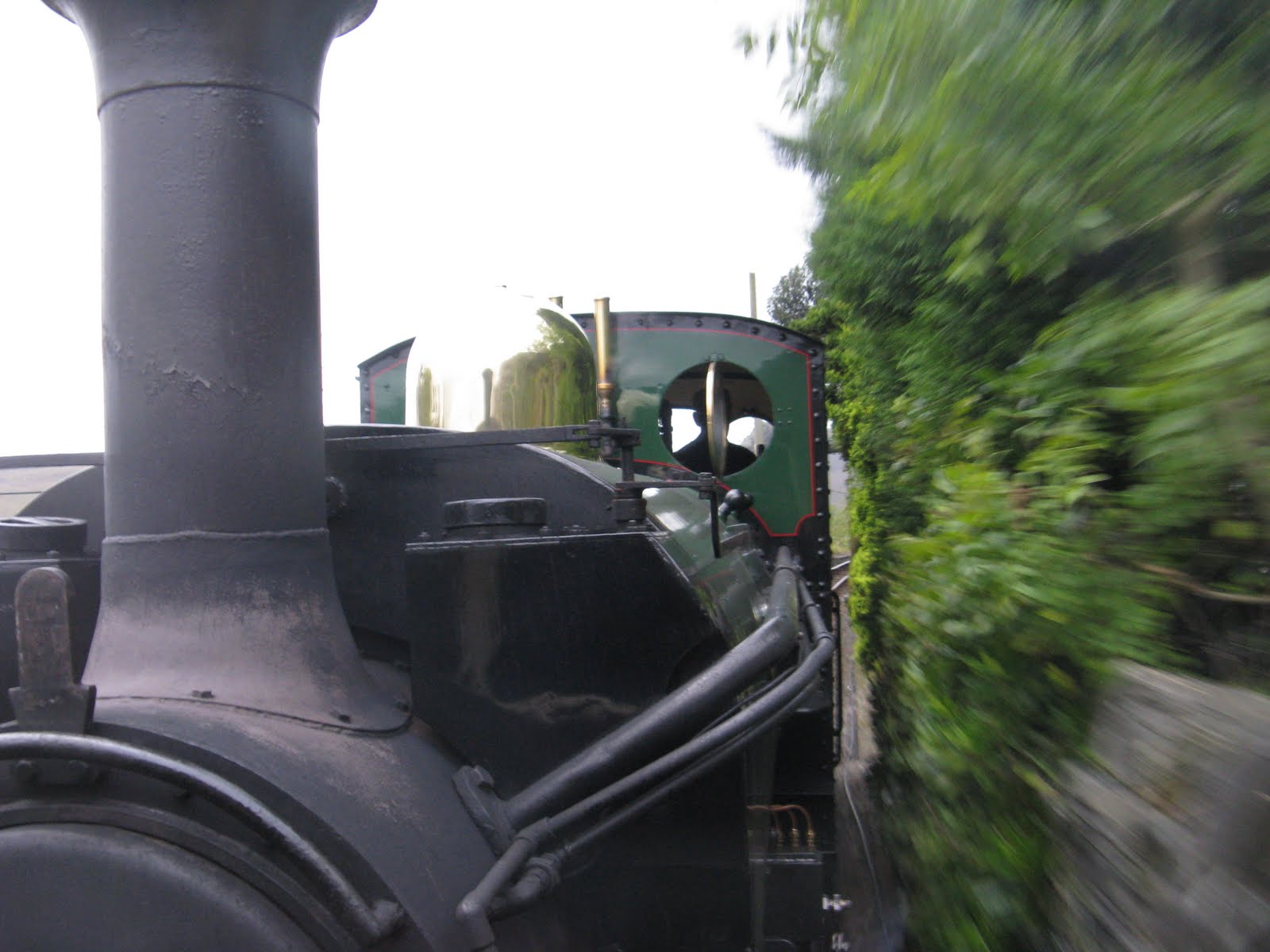
The Ffestiniog railway is an old fashioned steam train driven railway, which travels from Porthmadog (which is where we caught it) to the small slate mining town of Blaenau Ffestiniog . The trips about an hour each way, and there is a mix of beautiful Welsh countryside/ mountains/ seaside views that you get on it. I do highly recommend it, it was a really nice and beautiful trip, BUT I will mention that it certainly aint cheap. For a standard 2nd class return ticket (theres only 1st and 2nd) it costs £19, and the first class one costs £29. We got two second class tickets- but literally, if you’re going to spend money on this railway trip, you may as well shell out the extra tenna to get first class, because 2nd class was very cramped, which is not what you want if you’ve just spent £20 on a ticket to have a comfortable traditional steam train ride.

So yeah, we did 2nd class on the way there, then we thought, screw it, let’s go 1st class on the way back- and it was luuush! We got the carriage right at the front of the train all to ourselves, which was cool because we could see how the old train works and everything. When we drove back, we decided to have dinner at this place that a lot of people had recommended in the visitors book back at the cottage: “The Castle Restaurant Armoury and Bar”. It is a gourmet Caribbean restaurant situated in Harlech- we couldn’t believe it, here we are practically in the middle of nowhere, and we find a gourmet Caribbean place, what are the odds? Oh, and check out this sunset I took a picture of before we went into the restaurant- isn’t it stunning? It was weird cause it was really really cloudy and rainy, but there was still this magnificent sunset.

I was excited as well, because I’d never been to a Caribbean restaurant before, but I guess I knew what to expect from it- especially since we watched Levi Roots “Caribbean Food Made Easy” recipe program the night before (soooo coincidental!). I was so impressed by this place, quite a cosy little restaurant. Which had a fairly cool looking bar area on the 2nd floor that you could book for parties and events. Nick had a chilli and lime marinated chicken, and I had the beef and coconut curry. Both of these came with rice and peas, a vegetable curry, a pumpkin and spinach curry, salad and either a roti (with my curry!) and macaroni pie with nick’s dish. I took a picture of it- doesn’t it look luuush?? Gert portions too.


I liked the look of the dessert menu when I came in, so I didn’t have a starter. For my pud, I chose the mango bavarois, and nick had the “Chocolate Box”- which was kinda like layers of chocolate mousse and chocolate sponge, encased in a hard chocolate shell. Both desserts were quite nice but nick’s was better- jealous! We then decided to go home, watch a bit of TV and plan the next day. As a final note, I have to say that if you do any travelling in North Wales, make sure you check out Harlech, because there seem to be a few really nice looking decent restaurants in that little town, plus some charming traditional cafes for lunch too, I highly recommend you visit the place.

Tuesday, October 4, 2011

Home Remedies for Wrinkles


Wrinkles
are thin lines on skin which shows up by age. There are many other reasons for the appearance of wrinkles.
Some of them are sun damage, smoking, dehydration and some medications.


Appearance of wrinkles with age is normal, but they don't give a good impact on skin. Some people try to hide them by using many Anti-Aging creams. With time, there has been great advancement in wrinkles treatment. One of them is Botox.

Botox is used to treat people with wrinkles. It makes you look younger than your age. But, like every other technology. This treatment has side effects as well. The most common side effect of Botox injections is bruising. Some of the other side effects include respiratory infection, nausea, headaches, temporary drooping of the eyelids and flu-like symptoms.


The best of all is to use Herbal Ways to Treat Wrinkles.


HOME REMEDIES FOR WRINKLES:

1- Use natural moisturizing creams and lotions regularly.

2- Drink at least 8 glass of water a day.

3- Use Aloe Vera Gel whenever you go out in the sun. It's a Natural Anti Aging susbtance.

4- Light massage your skin with creams or lotions every night.

5- Eggs are natural solution for wrinkles. Use egg white on your face, it helps reducing wrinkles.

6- Take 1 teaspoon of raspberry juice with 1 egg yolk, add 1 teaspoon of orange juice and some olive oil. Mix well and once everything is mixed add 2 tablespoons of oatmeal. Mix it into a paste form. Once ready apply on the wrinkles and let it dry, then wash your face with lukewarm water.

7- Avocado is a fruit that is rich with vitamin E. Which is used as a Anti Aging substance.

8- All types of berries consist of phytochemicals which are natural anti-oxidants and helps defend the body against harm caused by aging process. Berries are also good in the weight loss process.